For Santa Cruz, CA residents who need CPR or BLS certification in 2026, the most important decision comes before you enter a classroom: confirm exactly which credential your employer, school, clinical program, or organization requires. “CPR certified” and “BLS certified” are sometimes used casually, but they do not always describe the same training.
A BLS CPR Certification Course is generally aimed at healthcare professionals and other people who may be expected to perform CPR as part of an organized emergency response. Training commonly addresses high-quality CPR, AED use, ventilations, recognition of life-threatening emergencies, and coordinated response skills. The American Heart Association’s current BLS course materials reflect its 2025 CPR and Emergency Cardiovascular Care guidelines.
For Santa Cruz residents planning certification or renewal in 2026, this guide explains how to choose the right course, prepare for training, and compare nearby options without making assumptions about your specific workplace or school requirement.
Key Takeaway: Start with the written requirement you were given, not simply the phrase “CPR class.” If it specifies BLS, look for a course that matches that credential and confirm the required training format before registering.
A 2026 BLS Decision Starts With Your Role
Different people in Santa Cruz can search for CPR classes for completely different reasons. A hospital employee may need BLS for work, a nursing student may need it before beginning a clinical rotation, and a childcare provider may need CPR and First Aid instead.
The American Heart Association describes BLS as training intended for healthcare professionals and other personnel who need CPR and basic cardiovascular life-support skills in both healthcare and out-of-hospital settings.
That makes BLS particularly relevant to many nurses, healthcare students, medical assistants, dental professionals, first responders, and other workers whose responsibilities may involve professional emergency response.
Community CPR and First Aid courses serve a different purpose. Teachers, coaches, caregivers, fitness professionals, workplace teams, and parents may need or choose those courses depending on their responsibilities.
If you already know you need healthcare-oriented training locally, review the Santa Cruz CPR, BLS, ACLS, and PALS class information and compare the available course type with your requirement.
What You Actually Learn in BLS
BLS training goes beyond memorizing the steps of CPR. It combines recognition, physical skills, and decision-making so a responder can move through an emergency in an organized way.
Current BLS course descriptions emphasize high-quality CPR, appropriate ventilations, early AED use, and effective performance during multi-rescuer CPR.
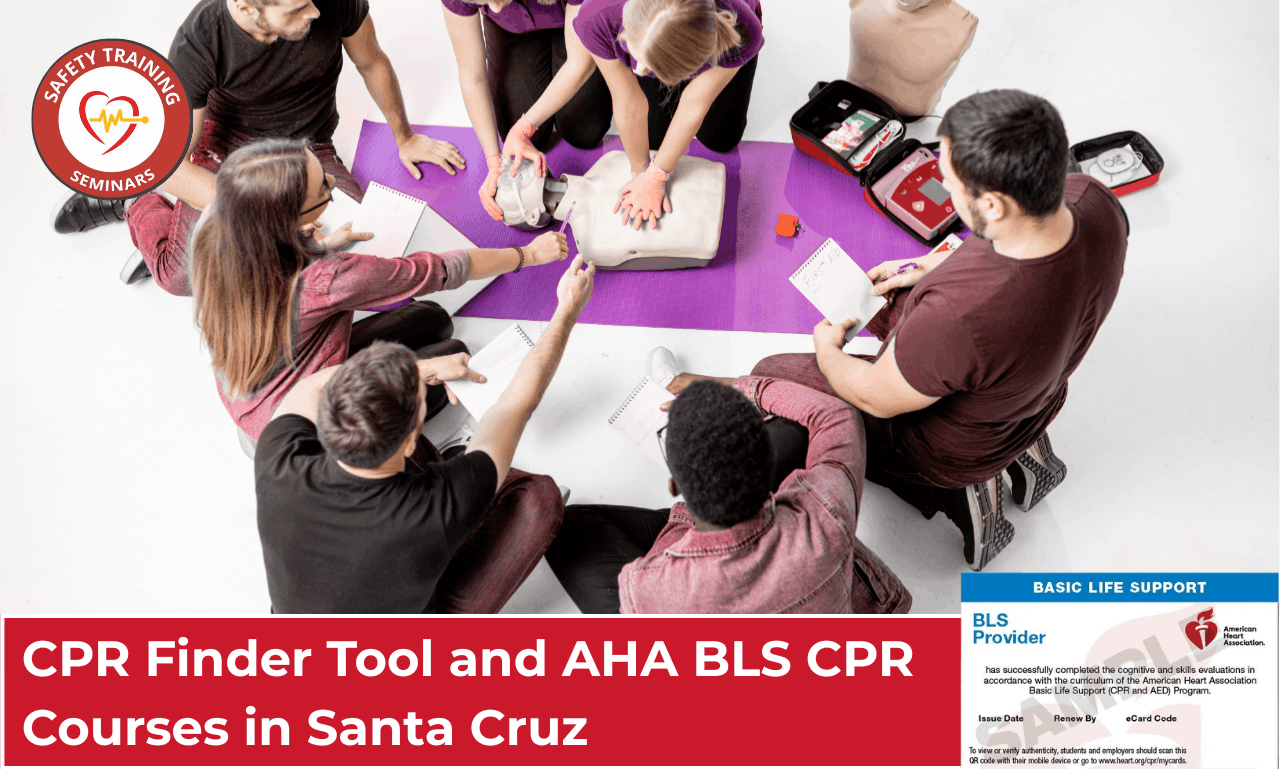
During training, participants may work with CPR manikins and AED training equipment while practicing the sequence of actions they would use during a cardiac emergency. Hands-on practice helps students connect the written steps with body position, compression technique, equipment use, and coordination with another responder.
For healthcare professionals, teamwork also deserves attention. A clinical emergency may involve multiple people performing separate tasks at the same time, so clear roles and effective communication can be part of BLS training.
The practical nature of the course is one reason you should pay attention to the format your employer or program requires.
Online, Blended, and Classroom Training Are Not Automatically Interchangeable
Online learning can be useful, but the word “online” does not tell you whether a course meets your particular certification requirement.
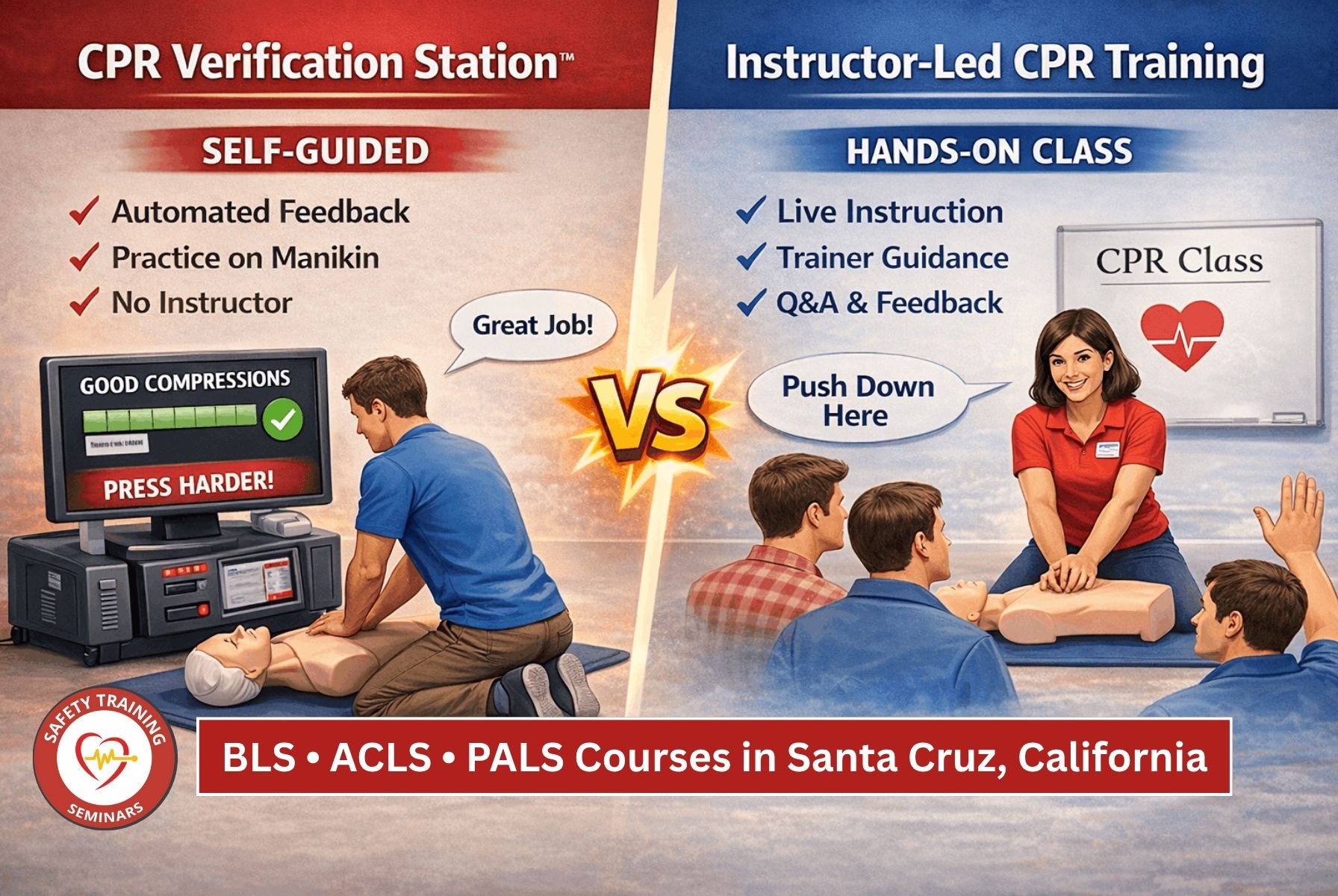
Some BLS training formats combine self-paced online coursework with a separate hands-on skills session. Classroom formats typically combine instruction, practice, and skills evaluation in an instructor-led setting. The American Heart Association currently lists classroom and blended approaches among its BLS course options.
Before choosing a format in 2026, verify what your employer, school, licensing organization, or clinical program expects. If the requirement includes hands-on skills assessment, do not assume that completing an online knowledge course by itself will be sufficient.
This check is especially useful for students approaching clinical-placement deadlines and employees completing onboarding. A few minutes spent verifying the wording of a requirement can prevent completing the wrong training format.
A Simple Pre-Class Checklist for Santa Cruz Residents
Preparing for BLS does not mean teaching yourself the entire course beforehand. It means removing avoidable questions before class so you can focus on skills practice.
Before registering or attending, check the following:
- Read the exact certification requirement from your employer, school, or program.
- Confirm whether it says BLS, CPR, First Aid, ACLS, PALS, NRP, or another course.
- Verify whether hands-on skills evaluation is expected.
- Review the provider’s current registration instructions.
- Wear clothing that allows comfortable movement during CPR practice.
- Bring any documents or materials specifically requested in your course instructions.
- If you are renewing, check the current course requirements instead of assuming they are identical to your previous class.
People living closer to Capitola or Soquel may also want to compare the Capitola CPR and healthcare certification class options while planning their training.
Know When BLS Is Not the Course You Need
Seeing several healthcare course abbreviations on the same website can make them appear interchangeable. They are not.
BLS focuses on foundational resuscitation skills such as CPR, AED use, ventilations, and coordinated basic life support. ACLS builds on BLS concepts for healthcare professionals involved in more advanced management of adult cardiovascular emergencies. The American Heart Association describes ACLS as an advanced course for professionals who participate in or direct the management of cardiac arrest and other cardiopulmonary emergencies.
PALS is associated with advanced pediatric emergency care, while NRP relates to neonatal resuscitation. CPR and First Aid courses may be more appropriate for many non-healthcare workplaces and community roles.
The safest registration strategy is therefore simple: match the course to the requirement. Do not select ACLS because it sounds more advanced if your paperwork specifically asks for BLS, and do not assume general CPR fulfills a BLS requirement.
Planning CPR Certification Around Santa Cruz County
Local course planning in Santa Cruz is not limited to people who live within the city itself. Healthcare workers, students, teachers, fitness professionals, and caregivers may travel between Santa Cruz and surrounding communities for work, school, or training.
Someone in Scotts Valley, for example, may prefer to compare a class closer to home rather than automatically registering in central Santa Cruz. The Scotts Valley CPR, BLS, ACLS, and PALS class page provides another location option to review.
Residents from Capitola, Aptos, Soquel, Felton, Ben Lomond, and Watsonville may make a similar decision. Location matters, but it should come after confirming the credential. A nearby class is only useful if it provides the type of training your employer, school, or organization expects.
This is particularly relevant for healthcare students whose school requirements and clinical-site requirements may be specific. Keep the written requirement available while comparing classes rather than relying only on the course name used in a search result.
Using Safety Training Seminars for Your Next Step
Safety Training Seminars provides CPR and healthcare training options for people in the Santa Cruz area. The Santa Cruz CPR Training Center is located at 1515 Capitola Road, Unit G, Santa Cruz, CA 95062.
Before enrolling, determine whether your requirement is for BLS, CPR and First Aid, ACLS, PALS, NRP, or another specific course. Then review the appropriate course information and current registration details for the location you are considering.
For someone traveling from southern Santa Cruz County, comparing the Watsonville CPR and healthcare certification classes may also be useful.
The goal is not simply to find the nearest class. It is to choose a location and course combination that fits both your practical needs and the credential you have been asked to complete.
Frequently Asked Questions About CPR and BLS in Santa Cruz
What is the difference between BLS and regular CPR certification?
BLS includes CPR but is generally structured for healthcare professionals and others who may participate in an organized emergency response. It commonly includes CPR, ventilations, AED use, and team-response concepts. A general CPR course may be intended for a different audience. Follow the exact requirement given by your employer, school, or organization.
What should a Santa Cruz nursing student check before taking BLS?
Start with your nursing program or clinical-placement instructions. Confirm the required certification name, whether a specific training format is expected, and whether hands-on skills evaluation is required. Requirements can vary among schools and clinical sites, so written program instructions should guide your registration decision.
Can residents of Capitola, Aptos, or Scotts Valley take a class in Santa Cruz?
Generally, learners can choose among available training locations, but location should be considered after the required course is identified. If you live in Capitola, Aptos, Scotts Valley, or another nearby community, compare course type and registration information before deciding where to attend.
Should I renew with the same course I took previously?
Not automatically. Review your current employer, school, licensing, or professional requirement before renewing. Your role or organizational instructions may have changed since your last course, so use current documentation rather than relying solely on what you completed previously.
What should I bring to a BLS CPR course?
Follow the instructions provided with your registration because required materials can vary. Comfortable clothing is practical for hands-on CPR skills practice. If you are taking the course to satisfy an employer or school requirement, keep that requirement available in case you need to confirm the exact credential.
Make Your 2026 Certification Plan Specific
For Santa Cruz residents, a good 2026 CPR certification plan begins with one piece of information: the exact course your employer, school, clinical program, or organization expects. BLS is commonly associated with healthcare professionals and structured resuscitation skills, while CPR and First Aid, ACLS, PALS, and NRP address different training needs.
Once the credential is clear, compare the available format, hands-on requirements, and location. Safety Training Seminars offers local course options for people in Santa Cruz and surrounding communities, but your individual requirement should guide the final choice.
Review the Santa Cruz or nearby course-location pages for current course availability, certification options, location details, and registration information before enrolling.