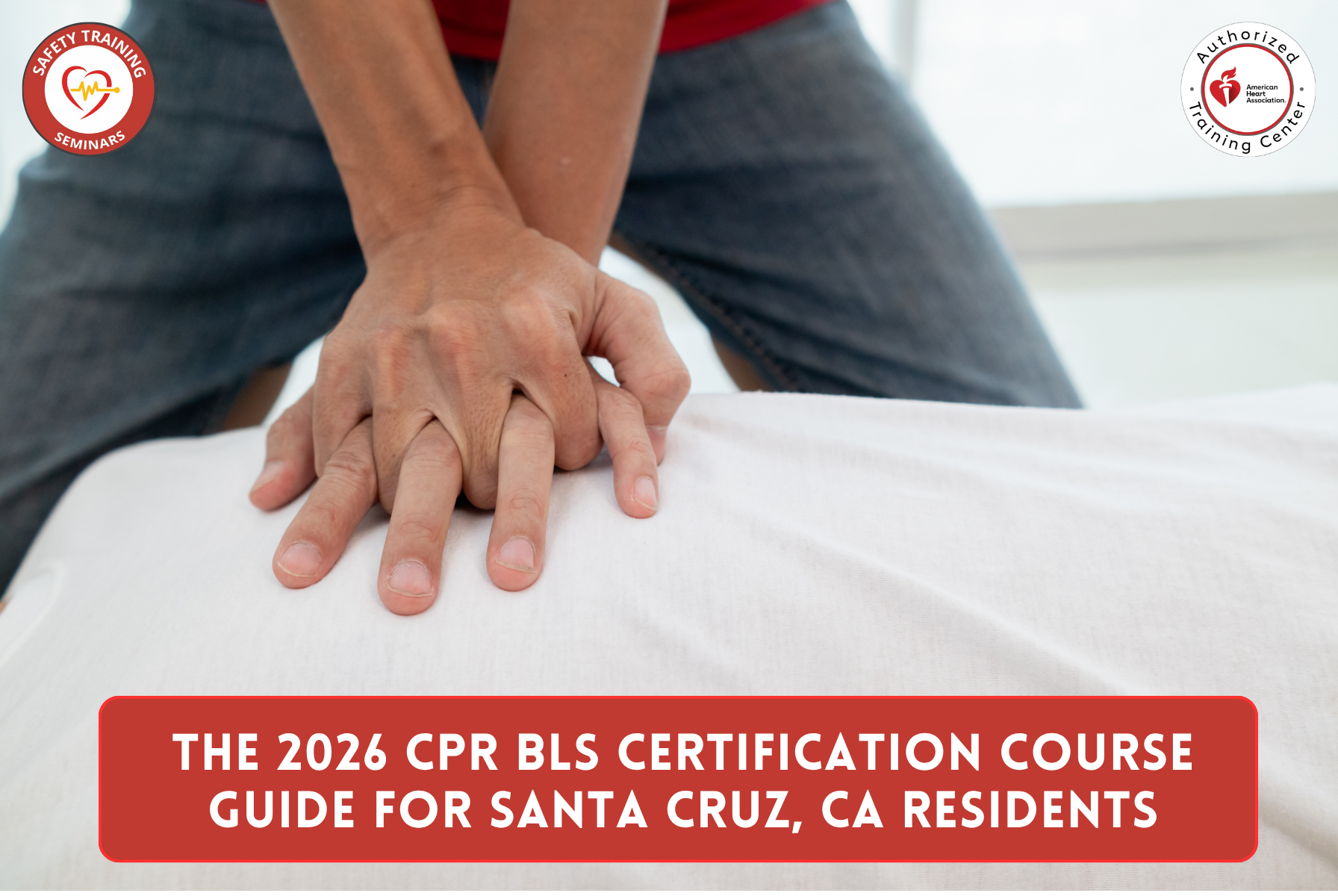
Healthcare professionals, emergency responders, childcare workers, and educators in Santa Cruz County regularly face specific CPR and advanced life support requirements. Navigating the differences between Basic Life Support (BLS), Advanced Cardiovascular Life Support (ACLS), and Pediatric Advanced Life Support (PALS) can feel confusing, but selecting the correct course ensures you fulfill workplace compliance without spending extra time or money on unnecessary training.
The primary differences between these credentials depend on your clinical scope of practice, your target patient population, and your employer’s mandates. BLS provides the foundation of manual CPR, Automated External Defibrillator (AED) usage, and basic ventilation for adult, child, and infant patients. ACLS builds upon those basic skills to cover advanced interventions, pharmacology, and cardiac rhythm interpretation for adult patients. PALS focuses on systematic assessment, respiratory distress management, and advanced resuscitation protocols specifically for pediatric patients.
Key Takeaway: BLS serves as the universal prerequisite course for almost all clinical healthcare workers and allied health students. Advanced credentials like ACLS or PALS are required for specialized care environments, such as emergency departments, intensive care units, or pediatric transport teams. Always verify your facility’s specific credentialing policy before registering.
Understanding Basic Life Support (BLS)
Basic Life Support (BLS) is the standard CPR certification required across the healthcare industry. Designed primarily for healthcare providers and public safety personnel, BLS focuses on non-invasive interventions to maintain circulation and breathing during sudden cardiac arrest or respiratory failure.
Core Skills Taught in BLS
- High-quality chest compressions for adults, children, and infants
- Proper single-rescuer and multi-rescuer team CPR dynamics
- Operation of Automated External Defibrillators (AEDs) across all age groups
- Effective ventilation using barrier devices and bag-valve-mask (BVM) resuscitators
- Relieving foreign-body airway obstructions in conscious and unconscious victims
Who Needs BLS in Santa Cruz?
BLS is the entry-level requirement for registered nurses (RNs), licensed vocational nurses (LVNs), certified nursing assistants (CNAs), emergency medical technicians (EMTs), paramedics, dentists, dental hygienists, physical therapists, and medical assistants. It is also a mandatory prerequisite for students entering local nursing and allied health programs across the Monterey Bay region.
Understanding Advanced Cardiovascular Life Support (ACLS)
Advanced Cardiovascular Life Support (ACLS) moves beyond baseline CPR to address advanced interventions during adult acute cardiovascular events. This training stresses team leadership, rapid clinical decision-making, and critical care algorithms.
Core Skills Taught in ACLS
- Electrocardiogram (ECG) rhythm analysis for bradycardia, tachycardia, and arrest rhythms
- Advanced airway management techniques, including supraglottic airways and endotracheal tubes
- Resuscitation pharmacology, focusing on IV/IO administration of epinephrine, amiodarone, and adenosine
- Management of acute coronary syndromes (ACS) and acute ischemic stroke
- Post-cardiac arrest care and targeted temperature management
Who Needs ACLS in Santa Cruz?
ACLS is required for healthcare personnel who manage adult patients in emergency or critical care settings. This includes emergency room physicians, intensive care unit (ICU) nurses, cardiac catheterization lab technicians, telemetry nurses, surgical teams, and paramedics. Candidates must hold an active BLS certification before enrolling in an ACLS course.
Understanding Pediatric Advanced Life Support (PALS)
Pediatric Advanced Life Support (PALS) addresses resuscitation and stabilization for infants, toddlers, and adolescents. Because pediatric cardiac arrest usually stems from severe respiratory distress or shock rather than primary cardiac disease, PALS protocols differ significantly from adult algorithms.
Core Skills Taught in PALS
- Systematic pediatric assessment utilizing the Pediatric Assessment Triangle (PAT)
- Recognition and early intervention for respiratory distress and respiratory failure
- Management of hypovolemic, distributive, cardiogenic, and obstructive shock
- Vascular access protocols, including intraosseous (IO) needle placement
- Weight-based medication dosing and fluid resuscitation algorithms
Who Needs PALS in Santa Cruz?
PALS is designed for clinical providers treating infants and children in acute care settings. Target professions include pediatric nurses, neonatal intensive care unit (NICU) staff, pediatric emergency specialists, urgent care clinicians, pediatricians, and transport teams. Like ACLS, holding an active BLS card is a mandatory prerequisite for PALS enrollment.
Side-by-Side Certification Comparison
Evaluating these certifications side by side helps clarify which training matches your career path and employer requirements:
| Certification | Focus & Patient Age | Clinical Prerequisites | Common Target Professions | Certification Validity |
| BLS | Basic manual CPR, AED, & ventilation (Adults, Children, Infants) | None | RNs, LVNs, CNAs, EMTs, Dentists, Students | 2 Years |
| ACLS | Advanced adult cardiac algorithms, ECG, meds, airway management | Active BLS card, ECG knowledge | ICU RNs, ED Staff, Telemetry, Paramedics, Surgeons | 2 Years |
| PALS | Advanced pediatric resuscitation, shock management, IO lines | Active BLS card, PALS pharmacology | PICU RNs, NICU Staff, Pediatric ER, Pediatricians | 2 Years |
Common Credentialing Mistakes Healthcare Job-Seekers Make
Navigating professional compliance requirements can lead to simple but costly mistakes during your job search or licensing application.
- Taking an Online-Only CPR Course: Many unaccredited online vendors offer instant CPR certificates without a hands-on skill evaluation. Most California healthcare employers, nursing boards, and hospitals reject 100% online certificates. Verified training requires physical manikin practice.
- Confusing Layperson CPR with BLS: Non-clinical professionals (such as workplace managers or fitness trainers) often need general CPR/AED training, whereas clinical staff require professional-level BLS. Taking a general CPR class will not satisfy clinical hiring standards.
- Skipping the BLS Prerequisite: Attempting to take ACLS or PALS without an active BLS credential will stall your certification process. Instructors cannot issue advanced cards without verifying foundational BLS competency.
- Waiting Until After Credentials Expire: Allowing your certification to lapse completely means you may have to complete a full initial course rather than a shorter renewal class.
Resuscitation Requirements for Santa Cruz Healthcare Professionals and Students
Healthcare providers working near Sutter Maternity & Surgery Center, Dominican Hospital, or outpatient specialty clinics throughout mid-county must maintain current credentials to comply with California Department of Public Health (CDPH) regulations.
Clinical students attending regional nursing programs or emergency medical services (EMS) training must secure their BLS cards prior to starting clinical rotations. Additionally, professionals commuting from coastal or mountain communities—such as those looking for Boulder Creek CA CPR BLS ACLS PALS classes or Live Oak CA CPR BLS ACLS PALS classes—often seek local, flexible class options that accommodate demanding work and clinical schedules.
Non-clinical professionals across the Monterey Bay area also require CPR credentials. Teachers, daycare staff, surf instructors along Pleasure Point, and fitness trainers near Westside Santa Cruz typically need basic CPR and First Aid training tailored to state licensing guidelines rather than advanced clinical courses.
Local Resuscitation Courses with Safety Training Seminars
Safety Training Seminars offers official American Heart Association (AHA) courses designed to fit the schedules of busy healthcare workers, students, and community members in Santa Cruz County.
Training Center Address
Safety Training Seminars Santa Cruz CPR Training Center Address: 1515 Capitola Road, Unit G, Santa Cruz, CA 95062
This facility is situated along Capitola Road between Live Oak and Pleasure Point, making it easily accessible for residents traveling from nearby areas, including those searching for La Selva Beach CA CPR BLS ACLS PALS classes, Davenport CA CPR BLS ACLS PALS classes, or Bonny Doon CA CPR BLS ACLS PALS classes.
Available Course Formats
Students can select the course structure that best suits their learning style and schedule:
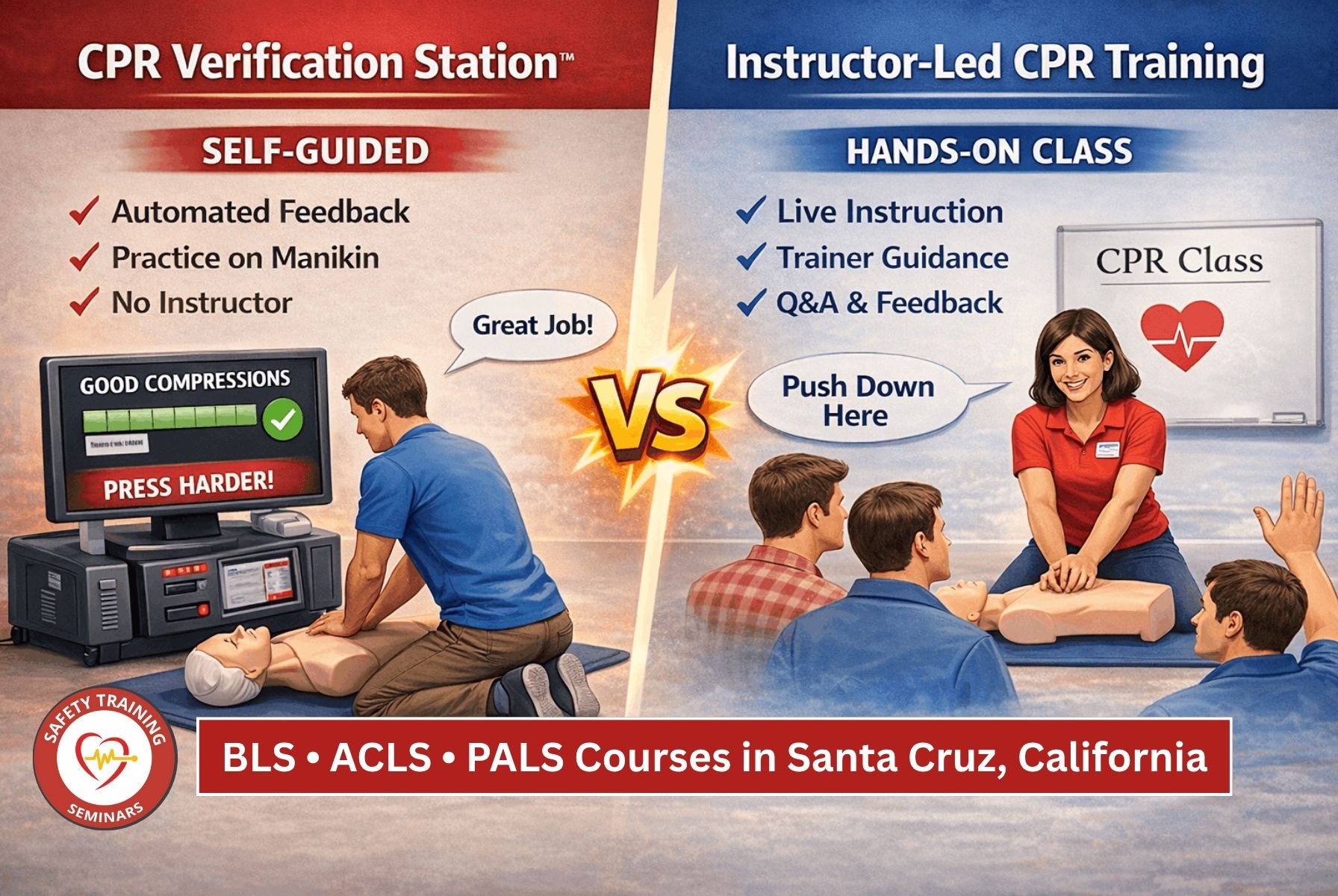
- Blended Learning (HeartCode®): Complete the self-paced AHA online cognitive portion at home, then attend a brief, hands-on skills verification session at the Santa Cruz center.
- In-Person Classroom Training: Attend a complete, instructor-led session combining lectures, hands-on practice, and testing in a collaborative classroom environment.
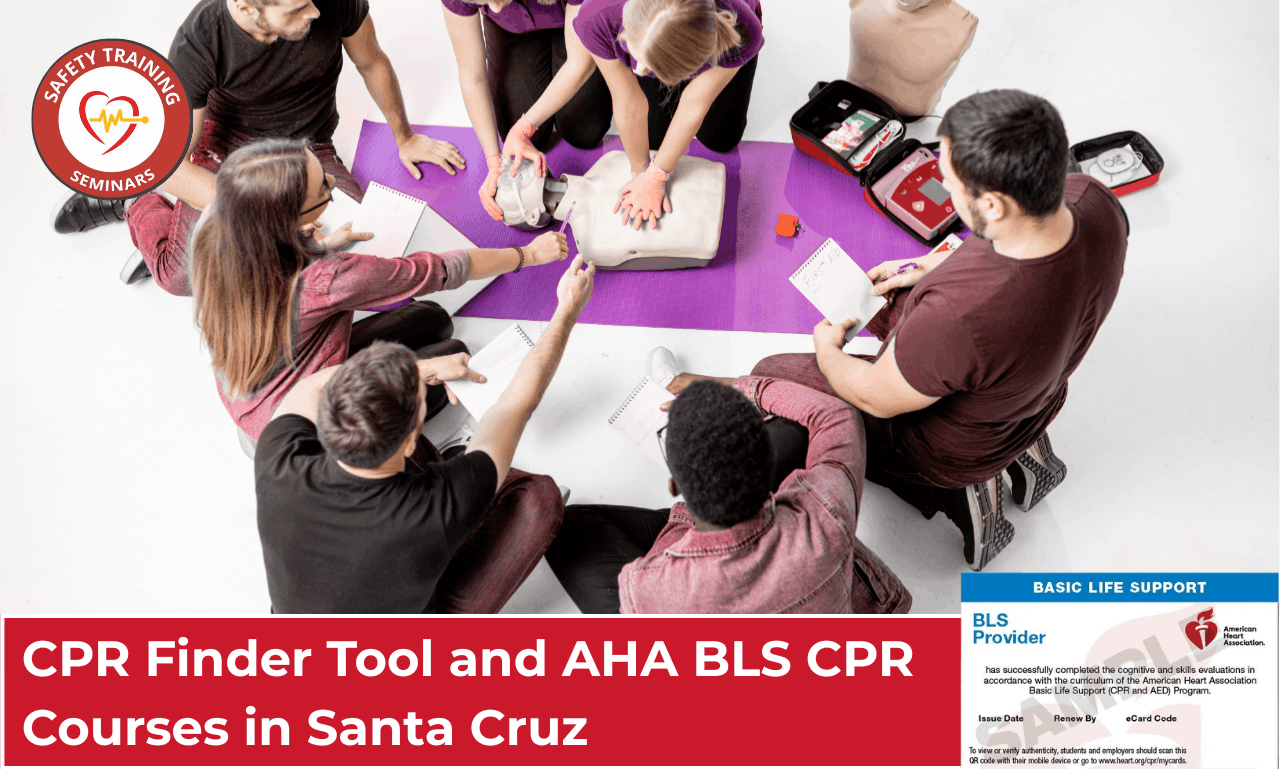
Upon successful completion of the coursework and hands-on skills evaluation, students receive their official AHA eCard.
Frequently Asked Questions
Which certification course is required for nursing students?
Nursing students almost universally require the American Heart Association BLS Provider card before participating in hospital clinical rotations. You should confirm the exact card requirements with your school’s nursing department before registering.
Can I complete my BLS renewal alongside my ACLS course?
Yes. Many healthcare providers renew their BLS credential during their ACLS training session. Selecting a combined option allows you to satisfy both requirements without scheduling two separate appointments.
How long are AHA BLS, ACLS, and PALS cards valid?
Official American Heart Association BLS, ACLS, and PALS certifications remain valid for two years through the end of the final month in which the card was issued.
Does a standard layperson CPR course satisfy healthcare employment requirements?
No. General workplace CPR or First Aid courses (such as Heartsaver) do not cover the multi-rescuer dynamics, bag-valve-mask ventilation, or advanced algorithms required for healthcare personnel. Clinical staff must complete the BLS Provider course.
Next Steps for Your Certification in Santa Cruz
Choosing the right certification comes down to identifying your specific professional role, clinical environment, and employer expectations. Whether you need a foundational BLS card for school entry or an ACLS credential for specialized hospital units, selecting the correct course ensures you remain compliant and prepared.
Before booking your class, check your facility’s onboarding portal or job description to confirm whether AHA certification is required. Healthcare workers, educators, and community members in Santa Cruz County can review available schedules, compare class formats, and register directly on the official Safety Training Seminars local course page.